FIST OF THE NORTH STAR
SEGA CORPORATIONAction
4.61.75K Reviews
- Version
- 8.0.0
- Installs
- 500.00K
- Age Rating
- Mature 17+
Screenshots
Our Review of FIST OF THE NORTH STAR
 Analysis by Appyee
I approached FIST OF THE NORTH STAR as a free action RPG rather than as a quick manga-themed distraction, and that distinction matters. It is built for players who enjoy assembling a large roster of recognizable characters, improving them over time, and dealing with the uncertainty that comes from random-item purchases. My first impression was that its strongest appeal is not simply the license or the dramatic presentation, but the way it turns character collection into the central reason to keep returning.
The game comes from SEGA CORPORATION and carries a Mature 17+ content rating, so it is aimed at an older audience. It was released on September 4, 2019, and the current version is 8.0.0. It is free to start on devices using Android 7.0 or later, with optional purchases listed from $0.99 up to $99.99 per item. That combination immediately tells me who should approach it carefully: fans who want a long-term character-building game may find plenty to do, while anyone looking for a completely predictable, one-time purchase experience should probably look elsewhere.
What the action RPG feels like in everyday play
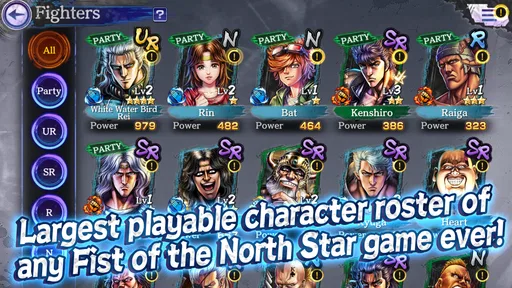
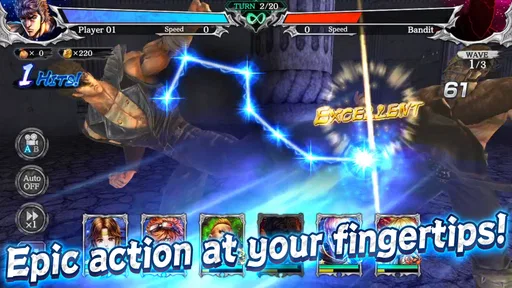
The core attraction is the chance to build a team from a broad manga roster and take those characters into action-focused encounters. I like that the game gives the collection layer a clear purpose. You are not merely filling a gallery; the characters are connected to the way you approach battles, and the satisfaction comes from deciding which fighters deserve attention instead of treating every new acquisition as automatically useful.
That makes the opening sessions easy to understand. I can imagine playing a few stages during a commute, checking which characters have become more useful, then returning later when I have enough resources to make a meaningful improvement. The format suits short bursts, but it also encourages longer sessions when I want to work through progression or experiment with a different team. The important point is that the game is structured around repeated improvement, not a single completed campaign that I finish and put away.
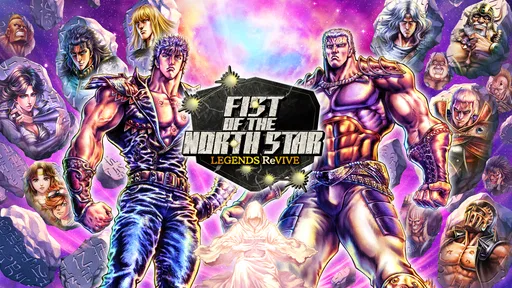
The manga identity is also more than decoration. The roster is the reason to care about the collection loop, and it gives each new character a stronger emotional pull than an anonymous fantasy unit would have. If I already know the world of Fist of the North Star, seeing familiar figures become part of my team adds context to every pull and upgrade. If I do not know the source material, the game can still function as an action RPG, but I would expect the character-collection appeal to feel less personal.
One useful habit is to decide on a small group of favorites before spending resources. A large roster can make every new character seem urgent, especially when random acquisition is involved. I get more enjoyment when I treat new arrivals as possibilities rather than obligations. That approach also reduces the temptation to improve everyone at once, which can leave a team broad but shallow.
Where the collection loop helps and where it creates pressure
The random-item purchase model is the most important part of the spending conversation. Purchases are optional, but the game openly includes random-item acquisitions, so the result of spending is not necessarily a specific character or a guaranteed improvement. I would not advise entering with the assumption that paying will remove uncertainty. It may give access to more chances, but chance remains part of the experience.
For me, the healthiest way to play is to separate free progression from paid temptation. I would first learn which characters and improvements actually fit my preferred style, then decide whether a purchase would add enjoyment rather than merely relieve impatience. That distinction is especially useful in a roster-driven RPG, where a new unit can look exciting before I know whether it solves a real problem in my current team.
The listed purchase range is wide, from $0.99 to $99.99 per item. That does not by itself prove that spending is required, nor does it tell me what a particular purchase will produce. It does mean I would check every confirmation screen carefully and set a personal limit before playing. A low-cost impulse can feel harmless, but repeated attempts at random rewards can change the total quickly.
I also think the game is better suited to players who enjoy gradual account development. If I want immediate access to a complete, balanced roster, the collection structure may feel tiring. The more satisfying route is accepting that progress has a rhythm: obtain useful characters, improve a core group, test them, and only then decide what the next priority should be. That rhythm can be rewarding, but it is not the same as a traditional action game where skill alone determines nearly every result.
Progression choices that make a difference
A practical mistake is spreading improvement materials across too many characters simply because the roster is large. I prefer to establish a dependable main group first, then keep a smaller reserve for situations where a different role or combination becomes valuable. This gives each upgrade a visible effect and makes the account feel stronger sooner.
Another useful approach is to judge a character by how well the whole team functions, not by how impressive the character looks in isolation. A famous manga name can be a strong reason to collect someone, but it is not automatically a reason to build the entire team around that character. I would test whether the unit improves consistency, damage, survival, or flexibility before committing scarce resources.
That is also where the game can create pressure. When a new character appears, the emotional appeal is immediate, while the practical value may take longer to understand. Waiting before spending is not as exciting, but it gives me time to see whether the character genuinely fills a gap. In a random-item system, patience is one of the few forms of control the player always has.
Fairness, competition, and the limits of what can be judged
Fairness is difficult to assess from the purchase information alone. I can say that the game is free to download and includes optional random-item purchases, but those facts do not establish whether paid characters are required for every mode, whether competitive rankings are dominated by spenders, or whether duplicate rewards have a particular value. I would avoid treating the payment model as either automatically unfair or automatically harmless without seeing those systems in practice.
My personal standard is simple: a player should be able to understand what a purchase offers, know when chance is involved, and still have a meaningful path forward without paying. The random-item element makes the first two points especially important. If I am spending, I want to make that decision with a clear head, not because the game has made stopping feel like throwing away progress.
For a competitive-minded player, I would be cautious. A roster game can be enjoyable when competition is a side activity, but it becomes more demanding when success depends heavily on access to particular characters or repeated investment. Since the available purchase details do not explain the balance of competitive play, I would try the free experience first and watch how much enjoyment comes from personal team-building rather than from chasing the strongest possible lineup.
Players who dislike randomized rewards should probably skip this one even if they enjoy action RPGs. There are other games in the category that focus more directly on fixed unlocks, skill-based combat, or a straightforward premium purchase. Those alternatives may offer less of the manga roster appeal, but they can be a better match for someone who wants to know exactly what each payment buys.
On the other hand, fans who treat collection as part of the fun may find the uncertainty less bothersome. I can enjoy a random acquisition system when I see it as an occasional bonus and remain comfortable continuing without a particular result. The line is personal, but I would not recommend relying on luck as the main plan for building a team.
Questions I would answer before installing
Is it genuinely free to play? Yes, the game is listed as free, and the purchases are optional. I would still regard “free” as an entry condition rather than a promise that every part of the experience will feel equally fast without spending. The sensible test is whether the early game gives me enough room to learn the systems and decide whether the loop is enjoyable on its own.
Is it suitable for children? The Mature 17+ rating makes it inappropriate to recommend as a children’s game. I would follow that rating rather than assuming that a manga-based presentation makes the content suitable for younger players. The presence of optional purchases is another reason adults should supervise access on shared devices.
Will it run on an older phone? The minimum requirement is Android 7.0, so compatibility depends on more than the age of the handset. The operating-system requirement gives a useful starting point, but I would also keep enough storage available and close other demanding apps if performance becomes inconsistent. I would not buy anything until I had confirmed that the game runs comfortably on my own device.
Does the large roster make it welcoming for newcomers? It can, provided I accept that learning the value of characters takes time. The recognizable cast gives newcomers an obvious reason to care, but the collection side can also feel busy. My advice would be to follow the early guidance, focus on a compact team, and avoid trying to understand every character immediately.
Is spending necessary to enjoy it? I would not describe it as necessary simply because the game is free and purchases are optional. However, optional does not mean irrelevant: random-item purchases can affect how quickly a player expands a roster or pursues a desired result. I would enjoy it most with a fixed budget of zero or a small amount that I could lose without regret.
Who will enjoy it, and who should choose another game
This is a good fit for a player who likes action RPG progression, manga characters, and the long-term satisfaction of improving a team. It is particularly appealing if I enjoy checking a roster, making choices about priorities, and returning to see whether a newly improved character changes how battles feel. The free entry makes it easy to sample that loop before deciding whether it deserves regular space on the phone.
I would recommend caution to anyone who is easily drawn into repeated random purchases. The range reaching $99.99 per item is enough for me to treat spending as a serious decision, not a minor add-on. I would also steer competitive purists toward a different action game if they want outcomes determined mainly by reflexes and practice rather than by collection depth and account development.
The game may also be a poor match for someone who wants a quiet, self-contained story with a clear ending. Its appeal is tied to ongoing roster growth and repeated play. That is a strength when I want a hobby game, but it can feel like work if I prefer to finish a campaign and move on.
My trust verdict after weighing the trade-offs
The public reception is encouraging: it holds a 4.6 average from around 25 thousand ratings, with roughly 1.7 thousand written reviews, and it has passed 500 thousand installs. Those figures suggest that the game has found a substantial audience, but they do not replace my own judgment about randomized purchases. Popularity tells me that the concept works for many players; it does not tell me whether the spending model will suit my habits.
I see the strongest version of this game as a controlled, character-focused hobby. I would install it for the manga roster and action RPG structure, play without rushing, build around favorites, and treat random-item purchases as optional entertainment rather than a shortcut I need. I would also decide on a spending boundary before the first tempting offer appears.
My honest recommendation is to try it only if you are comfortable with collection-driven progress and random rewards. For that audience, the combination of familiar characters and ongoing team development can be compelling. For everyone else, especially players seeking transparent unlocks, a fixed-price experience, or purely skill-based competition, another action game will probably feel more comfortable. Its free starting point makes sampling reasonable, but the best experience comes from knowing exactly what kind of player you are before the collection loop starts asking for your attention.
Verdict
Strengths of FIST OF THE NORTH STAR
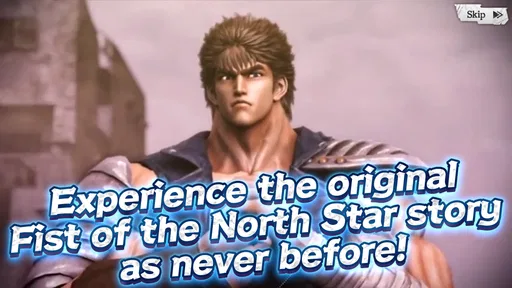
- Faithful post-apocalyptic setting with recognizable characters and story moments.
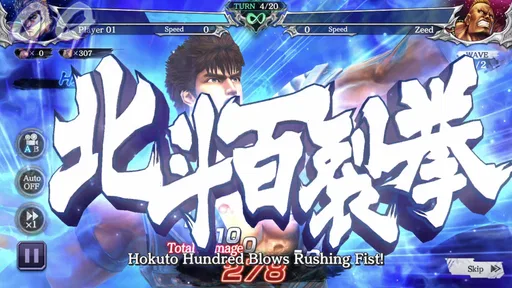
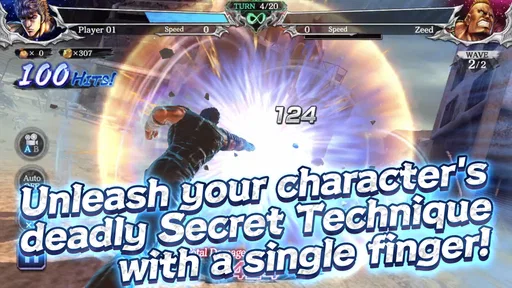
- Fast, satisfying combat with flashy techniques and powerful finishing moves.
- Many upgrade systems provide long-term goals beyond the main campaign.
- Frequent events and challenges give returning players extra content.
- Playable on mobile with intuitive controls and polished visual effects.
Limitations of FIST OF THE NORTH STAR
- Gacha mechanics can make obtaining top characters and gear feel uncertain.
- Progress may slow noticeably without regular resource farming or spending.
- Battles can become repetitive when relying on the same strongest team.
- Large downloads and updates may consume considerable storage and data.
- The interface can feel crowded because of numerous menus and currencies.
Other Releases by SEGA CORPORATION
View All
Sonic Rumble Party
Action4.3

HATSUNE MIKU: COLORFUL STAGE!
Music4.5

P5X | Persona5: The Phantom X
Role Playing4.3
Similar Picks in This Category
View All
Temple Run 2: Endless Escape
Imangi Studios4.1

PUBG MOBILE
Level Infinite4.3

Free Fire: 9th Anniversary
GARENA INTERNATIONAL I4.4

Talking Tom: Hero Dash Run
Outfit7 Limited4.3

slither.io
Lowtech Studios3.9

Sniper 3D:Gun Shooting Games
Wildlife Studios4.6
Frequently Asked Questions
What is FIST OF THE NORTH STAR about?
FIST OF THE NORTH STAR is a mobile action RPG based on the classic post-apocalyptic manga and anime. You build a team of familiar characters, follow a dramatic story inspired by the original series, and fight enemies through turn-based battles. The game combines character collection, upgrades, special techniques, cinematic attacks, and several competitive and cooperative modes.
Is FIST OF THE NORTH STAR free to download and play?
Yes, FIST OF THE NORTH STAR can generally be downloaded and played for free, but it includes optional in-app purchases. These purchases may provide premium currency, summon opportunities, upgrade materials, or other useful resources. Progress is possible without spending money, although free players may need more patience when collecting powerful characters and keeping up with later content.
Does the game require an internet connection?
FIST OF THE NORTH STAR is designed as an online game, so a stable internet connection is normally required for most features. Story progression, character summons, events, account data, rewards, and multiplayer-related content connect to the game’s servers. Because of this, it is not a suitable choice for completely offline play, and performance may suffer on unreliable mobile networks.
What kind of gameplay and progression does it offer?
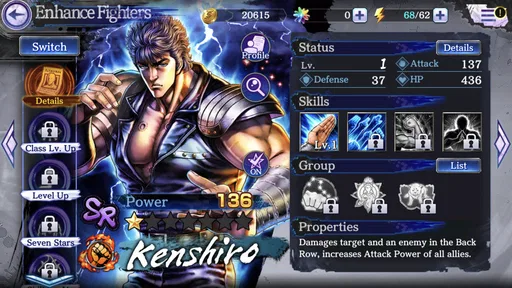
The main gameplay focuses on assembling a team of fighters and using their abilities strategically during battles. You can improve characters through levels, equipment, skills, upgrades, and other progression systems. Team composition matters because characters have different roles and strengths. In addition to the story campaign, the game typically offers challenges, events, resource stages, and competitive content.
Is FIST OF THE NORTH STAR suitable for every player?
The game is best suited to fans of the FIST OF THE NORTH STAR universe and players who enjoy anime-themed mobile RPGs with character collection and recurring events. It includes intense combat, dramatic scenes, and stylized violence consistent with the source material, so it may not be appropriate for young children. Players should also be comfortable with gacha-style recruitment, daily tasks, and optional spending systems.
Play our best games!


